


An auto shop floor coating Chicago repair shops can rely on is a deep-bonding polyurea system that resists oils, solvents, fuels and automotive fluids. It adds slip-resistant texture in wet bays and wipes clean at the end of a shift. TORQ Coatings installs automotive floor coatings for service bays, detailing zones and parts rooms in Chicago, Cicero and Melrose Park. A sealed floor keeps fluids on the surface where your team can clean them up. Bare concrete lets them soak in and stay there. That difference is the whole case for an auto shop floor coating Chicago service bays can count on.
What Bare Concrete Costs A Repair Shop
Bare concrete in a service bay soaks up motor oil, transmission fluid, coolant and brake cleaner. Those stains never fully come out. The floor starts to look dirty no matter how often it gets swept, and customers walking through the shop notice.
Porous concrete also sheds dust that settles on fresh paint, open engines and parts on the bench. Spills that soak in can stay slick for days. That is a safety problem in a space full of creepers, jacks and lifts. Heavy rolling loads and dropped tools also chip away at worn edges until the slab starts to break down.
How Our Auto Shop Floor Coating Chicago System Is Built
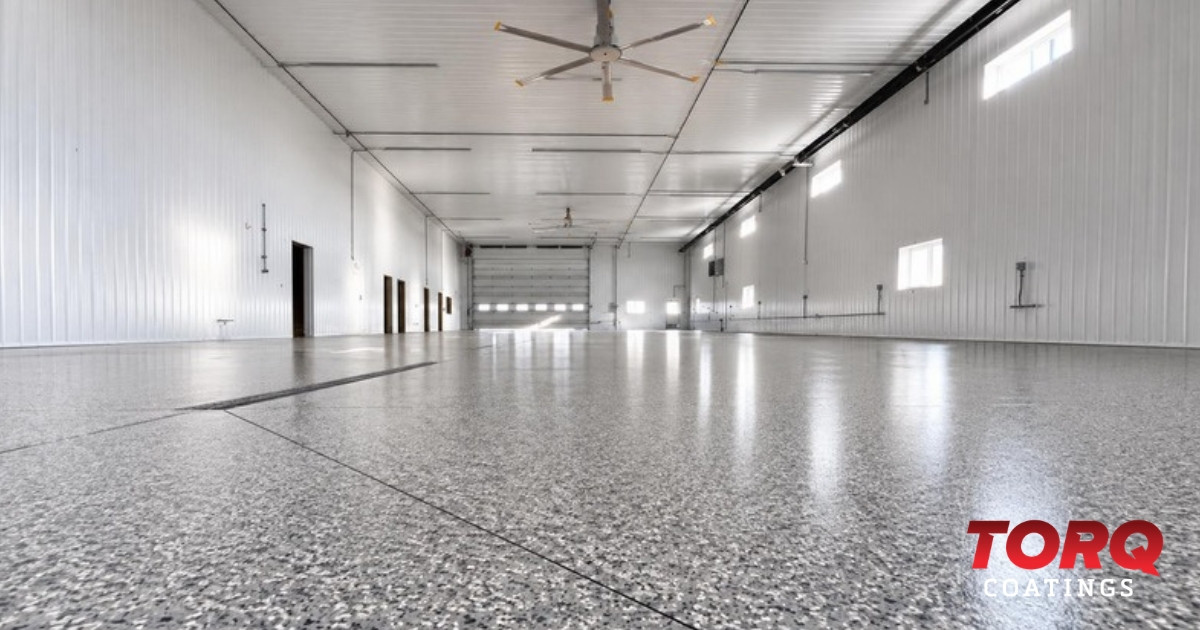
Every shop job starts with diamond grinding to a CSP 3 or better profile. Grinding removes surface contamination and opens the concrete for bonding. Cracks, spalls and broken joints get repaired. With the slab sound, the crew lays a polyurea basecoat, broadcasts flake and seals the floor with a polyaspartic topcoat.
The system is engineered to resist oils, solvents, heat, impact and abrasion. It handles the constant movement of jacks, tool carts and rolling equipment. Slip-resistant additives in the topcoat give better footing in wet, oily or high traffic zones.
Getting Oil Out Of The Concrete First
Older shops often have years of oil soaked into the slab. Grinding removes the surface layer, and we inspect for deep saturation around lift posts and drain pans. Heavily contaminated areas need extra attention before coating. The basecoat has to bond to clean concrete, or it will not stay put.
Spills, Cleanup And Shop Safety
Federal workplace rules expect clean floors. Under 29 CFR 1910.22, walking and working surfaces must be kept free of hazards such as leaks and spills. Workroom floors must be kept clean and, to the extent feasible, dry. A non-porous coated floor makes that standard easier to meet, since spills stay on top and wipe up quickly.
Cleanup matters for the environment too. The Illinois EPA used oil guidance warns that one gallon of used oil can make a million gallons of fresh water undrinkable. It asks shops to contain spills with sorbent pads or granules. It also says used oil should be stored on surfaces that do not let it seep through. A sealed floor helps keep small drips contained and out of the concrete.
Zones Inside A Busy Shop
Different parts of a shop need different finishes. Service bays and repair areas get oil resistant, slip-resistant texture. Detailing and wash zones need moisture resistance against water, shampoos and chemical cleaners. Parts rooms need impact resistance for shelving and carts.
Showrooms and customer areas can carry a cleaner, brighter finish that shows off vehicles. Shops that also run fabrication or light production can look at our manufacturing floor coatings. Our industrial floor coatings page covers heavier equipment and chemical exposure.
Lift Posts, Drains And Trench Lines
Lift bases, floor drains and trench grates are where shop floors usually fail first. Fluids collect there, and cleaning tools hit the edges every day. We grind and coat tight to those features and pay extra attention to the transitions. A clean edge at each lift post keeps oil from working under the coating.
Keeping Downtime Short
Every hour a bay sits empty costs money. Our installs are planned to reduce operational downtime. We often phase work bay by bay so part of the shop keeps running. Larger commercial spaces may take more than one day, and we map out the schedule with you before work starts.
Many shops choose weekends or slow days for the first phase. During the estimate, we mark lift posts, drains and trench lines. We also confirm how long each zone needs before vehicles return. Our post on minimizing commercial floor coating downtime covers scheduling options in more detail.
Heat, Hot Tires And Heavy Lift Loads
Shop floors take heat that a home garage never sees. Cars roll in straight off the road with hot tires and hot exhaust parts. A soft coating can lift under those tires, which is the same hot tire pickup that ruins many residential epoxy floors. Our polyaspartic topcoat is designed to resist lifting and marking from hot tires.
Lift posts and jack stands also concentrate weight on small points. Grinding, crack repair and a well bonded basecoat give those loads a sound surface to sit on. We check the slab around every lift during the walkthrough and repair damaged concrete before coating.
Dealerships And Service Centers
Dealership service lanes and showrooms carry the same needs as an independent shop, with more customer traffic. Our portfolio includes a dealership floor coating project built for constant vehicle traffic, heavy foot traffic and chemical exposure. The same system can run from the service drive through the bays and into the parts room.
Showroom floors usually get a cleaner, brighter look, while service bays get more texture. Keeping one coating family across the building makes upkeep simple for the cleaning crew. It also gives the business one consistent look from the front door to the back lot. Every auto shop floor coating Chicago dealers request gets planned zone by zone for that reason.
Image And Customer Trust
Customers judge a shop by what they see. A clean, bright floor tells them the work on their car will be careful too. That first impression starts at the service counter, where most customers can see straight into the bays.
A better floor also helps with hiring. Technicians notice when a shop is clean, well lit and safe to work in. It is a small signal, but it adds up over years of daily work.
Lighting, Line Striping And Bay Markings
A lighter floor reflects shop lighting and brightens work areas under vehicles. Technicians see dropped bolts and small leaks faster on a light gray or white blend than on stained concrete. That small change can reduce time spent hunting for parts on the floor.
Many shops also want bay outlines, walkways or safety zones marked on the floor. Tell your estimator early if you plan markings, so the layout can be planned with the coating schedule. Clear markings help keep customers and staff out of active work areas.
Daily Care For A Coated Shop Floor
A coated shop floor cleans with a broom, a squeegee and an auto scrubber or mop. Use a degreaser that suits the coating. Wipe fresh spills before they spread, keep sorbent pads near lifts and rinse wash bay residue at the end of the day. Avoid letting harsh acids or strong solvents pool for long periods.
Homeowners who work on their own cars can get the same chemistry at home with our residential garage floor coatings. For shops, the commercial team handles scheduling, phasing and walkthroughs from start to finish.
Auto Shop Floor Coating Questions Answered
What is the best floor coating for an auto repair shop?
A deep-bonding polyurea system with a polyaspartic topcoat suits most repair shops. It resists oils, solvents, fuels and automotive fluids and handles tools, jacks and rolling equipment. Slip-resistant additives improve footing in wet or oily bays, which helps keep technicians safe on busy days.
Can you coat a shop floor that already has oil stains?
Usually, yes. Diamond grinding removes surface contamination, and we inspect for deep oil saturation around lifts and drain pans. Heavily contaminated areas need extra prep so the basecoat bonds to clean concrete. We check this during the walkthrough before giving a price.
Is a coated shop floor slippery when oil spills?
Any spill can make a floor slick, so we add slip-resistant texture in service bays and wet zones. Because the surface is non-porous, spills stay on top and wipe up quickly instead of soaking in and staying slick for days.
How long does an auto shop floor coating take?
It depends on the size of the shop and the condition of the slab. Larger commercial spaces may take more than one day. We often phase work bay by bay so the shop can keep running, and we confirm timing before work starts.
Does a coated floor help with spill cleanup rules?
A non-porous floor makes it easier to keep surfaces clean and free of spills, which federal workplace rules under 29 CFR 1910.22 expect. It also helps keep small drips out of the concrete. Shops still need proper sorbents and used oil storage.
Do you coat auto shops in the Chicago suburbs?
Yes. TORQ Coatings serves auto shops, dealerships and service centers across Chicago, Cicero, Melrose Park and the surrounding Cook County suburbs from our Lombard office. A free walkthrough includes a slab check, a zone plan and a schedule built around your busiest days.
Request A Free Floor Coating Quote For Your Shop
A clean, sealed floor makes a repair shop safer, easier to clean and more professional for customers. A TORQ Coatings estimator will walk your bays, check the slab and plan a schedule that limits downtime. Request a free floor coating quote for your shop, or contact our commercial team at 630-473-4116 for a walkthrough in Chicago, Cicero or Melrose Park.