


A front porch coating road salt cannot eat through seals the concrete so brine sits on top instead of soaking in, freezing and flaking the surface. TORQ Coatings installs slip-resistant, UV-stable systems for patios and front porches in Chicago, Naperville and Oak Park. Front porches take more salt than almost any other slab at the house. Owners salt them hard for safety, and every visitor tracks more in from the sidewalk. A sealed surface lets you keep the porch safe without sacrificing the concrete.
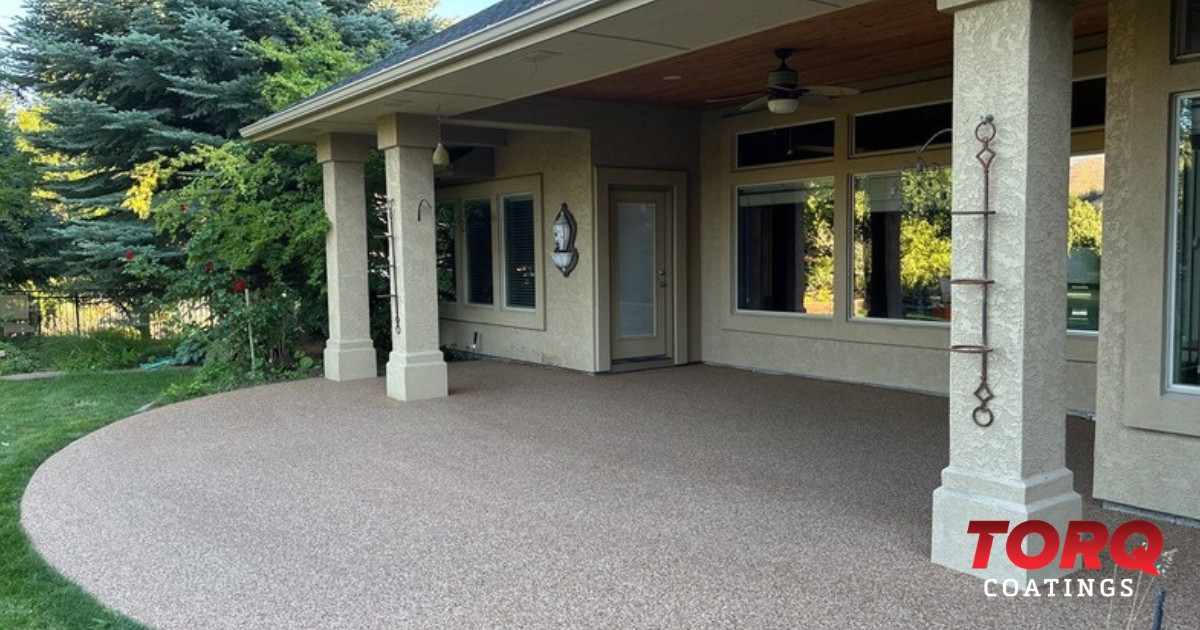
How Salt Ruins A Bare Concrete Porch
Concrete is porous. When salt melts ice on a bare porch, the brine soaks into the top layer. Overnight it can refreeze, expand and push tiny flakes of concrete loose. After a few winters, the porch shows scaling, pitted patches and exposed stone where the smooth top used to be.
Steps and edges usually fail first. They dry slowly, collect runoff and take the most foot traffic. That is why so many Chicago bungalow and Oak Park porches look worn at the nosing long before the middle of the slab shows damage.
What A Front Porch Coating Road Salt Resistant Needs
A porch coating has three jobs. It must seal out brine, hold its color in direct sun and give shoes grip on wet or icy days. A thin paint or sealer from a hardware store usually manages one of those, briefly.
Our process opens with diamond grinding to a CSP 3 or better profile so the coating bonds into the concrete. Cracks, spalls and chipped step edges get repaired. Then the polyurea basecoat, decorative flake and a UV-stable polyaspartic topcoat go down in order. On porches, we nearly always recommend the optional slip-resistant additive in that final coat.
Color That Stays Put In The Sun
South and west facing porches in Naperville and Chicago bake in summer sun. Our 100 percent UV-stable topcoat is designed to prevent the yellowing and fading that affect many epoxy products outdoors. The porch keeps the color you picked instead of turning amber by its second summer.
Traction On Icy Steps
Safety is the reason people salt porches in the first place, so traction is not optional. Flake texture adds grip, and the slip-resistant additive adds more. We focus extra texture on step treads and the landing outside the door. Our article on traction on coated floors explains how texture choices affect grip.
A coated porch still needs snow removal. What changes is how the surface handles what comes after. Brine stays on top, and ice releases more easily from a smooth sealed surface. A quick sweep clears leftover grit.
Using Less Salt On A Sealed Porch
Less salt is better for the lawn, the plants by the steps and the waterways downstream. The Metropolitan Water Reclamation District of Greater Chicago recommends shoveling first. It says a 12-ounce mug of salt covers about 250 square feet of sidewalk. It also warns that untreated salt stops working below about 15 degrees, when sand is a better choice for traction.
A sealed porch makes that advice easier to follow. Snow comes off cleanly with a shovel, so you need salt only for the thin glaze left behind. Owners often find they need far less salt after coating, simply because the surface clears faster.
Prep For Older Chicago Porches
Many porches in Chicago and Oak Park have years of paint layered on them. Paint traps moisture and peels in sheets, taking any new coating with it. Diamond grinding removes those layers down to sound concrete before we coat.
We also check for structural problems. A porch slab pulling away from the house, a step that rocks or a landing that has sunk all point to trouble below. Those need a concrete repair before any coating, since movement of the slab is not something a finish can fix. We would rather flag that early than coat over it.
Railings, Posts And Door Thresholds
Porch details take extra care. Railing posts anchored in the concrete, metal thresholds and storm door sills all create edges where water collects. We grind and coat tight to those edges and seal around post bases so brine cannot sneak under the finish.
Rusty posts can stain a new coating over time. If your railing shows rust at the base, we suggest treating or replacing it before or soon after the porch is coated. That keeps orange streaks off a fresh surface. Small details like these decide whether a front porch coating road salt hits every winter still looks sharp years later.
Matching The Porch To The Rest Of The House
Front porches on Chicago bungalows, Oak Park four-squares and newer Naperville homes all call for different looks. Red brick pairs well with warm, earthy flake blends. Gray siding and stone suit cooler blends with black and white chips. A design consultant can hold samples against your siding so you see the match in daylight.
Some owners want the porch to stand out, while others want it to disappear into the house. Both work. The coating system stays the same, and only the color and texture change.
When To Book A Porch Coating
Timing matters for outdoor work in the Chicago area. Porch coatings need a dry slab and workable temperatures on install day. Late spring through early fall gives the widest window, and fall is popular because the porch is sealed before the first salt goes down.
If your porch is already scaling, waiting another winter usually means more repair work later. We can often fit a porch into a single day, and you can walk on it the next day. Booking early in the season gives you the best choice of dates before the weather turns. A front porch coating road salt has not yet damaged also costs less to prep, since there is less scaling to repair.
Finishes That Lift Curb Appeal
The front porch is the first surface guests see. Our design consultants help you choose a flake blend that suits brick, stone or siding. Many owners extend the same finish to walkways and side steps with outdoor coatings. Others carry it into the garage with garage floor coatings for a matched look.
For a deeper look at outdoor chemistry, our guide to outdoor concrete coating options compares polyurea and polyaspartic with epoxy. If the finish ever peels, chips or yellows because of our installation or a product defect, our limited lifetime warranty covers the labor and materials to fix it.
Porch Coating And Salt Questions Answered
Will road salt ruin my front porch?
Salt can ruin bare concrete by soaking in and freezing, which causes scaling and pitting. A sealed porch coating keeps brine on the surface, so it cannot work into the concrete. Our system is designed to resist road salt, de-icers and freeze-thaw cycles.
Is a coated porch slippery in winter?
A smooth wet surface can be slick, so we build traction into porch coatings. Flake texture and an optional slip-resistant additive give shoes grip, especially on steps and landings. Shoveling and a light treatment for ice are still needed during storms.
Can you coat a painted front porch?
Yes, but the paint has to come off first. Paint traps moisture and peels, taking any new coating with it. We diamond grind the porch down to sound concrete, repair cracks and chipped edges, then install the coating system so it bonds to the slab itself.
Will a porch coating fade in the sun?
Our topcoat is 100 percent UV-stable and is designed to prevent the yellowing and fading that affect many epoxy products outdoors. South and west facing porches keep their color through summer sun instead of turning amber after a season or two.
Can I still use salt on a coated porch?
Yes. Our coating resists road salt and de-icers. Most owners find they need far less salt because snow comes off the sealed surface more cleanly. Sweeping away leftover salt after the ice melts keeps the finish clean and protects nearby plants.
Can a coating fix a cracked or sinking porch?
No. We repair surface cracks and chipped edges, but a porch that is sinking, pulling away from the house or rocking needs concrete work first. Our warranty excludes substrate failure, so we flag structural problems during the estimate before quoting.
Request A Free Porch Quote Before The Next Freeze
A porch that is already scaling only gets worse with each winter of salt. A TORQ Coatings estimator will check the slab and steps, flag any structural concerns and show you finish options. Request a free porch quote now, or dial 630-473-4116 and we will find a time to visit your Chicago, Naperville or Oak Park home.